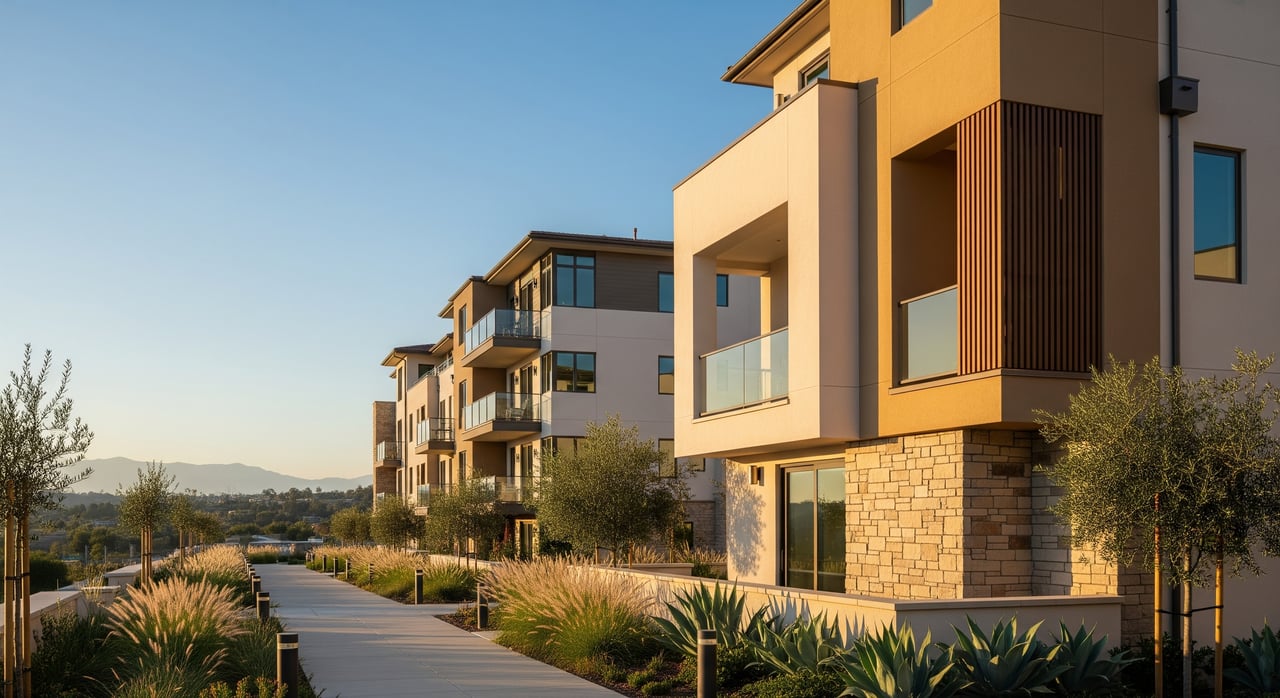
Trying to choose between a condo and a townhome in Aliso Viejo? You’re not alone. Many buyers weigh monthly costs, privacy, parking, and maintenance before deciding. This guide breaks down the differences in simple terms and gives you a checklist and decision matrix to compare homes confidently. Let’s dive in.
Condo vs. townhome: what actually differs
Understanding how each is owned helps you predict costs and responsibilities.
- Condominium (condo): You own the interior of your unit and share ownership of common elements like the exterior, roof, landscaping, and amenities. The HOA usually maintains most exterior and common areas.
- Townhome (townhouse): Typically a multi-level attached home with a private entry and often a garage. Ownership may be fee-simple (you own the land and structure) or structured under a condominium HOA. This changes who maintains and insures the exterior.
Key takeaway: The legal structure controls who fixes the roof, what your insurance covers, and what your HOA dues include. Always review the CC&Rs and the HOA’s master insurance policy before you commit.
Monthly costs: what to expect in Aliso Viejo
Your monthly cost is more than a mortgage payment. Plan for:
- HOA dues: Cover items like exterior upkeep, roofing, landscaping, reserves, trash, common utilities, and amenities. Dues vary by community and amenity level.
- Insurance: Condos typically need an HO-6 “walls-in” policy. Townhomes may require a broader HO-3 policy if you’re responsible for the structure. The HOA’s master policy type matters.
- Utilities and services: Some HOAs include water and trash. Others bill separately.
- Property taxes and potential special assessments: Review the reserve study and recent board minutes to gauge upcoming projects.
What to request for clarity:
- Current monthly HOA dues and recent increases.
- Latest reserve study and HOA budget.
- Board meeting minutes and any special assessment history.
- Insurance summary for the master policy.
Privacy and living experience
Privacy depends on building form and layout.
- Condos: Often stacked or garden-style with shared corridors and closer neighbor proximity. You may notice more sound transfer and have less private outdoor space.
- Townhomes: Frequently offer private entries, attached garages, and small patios or yards, which can enhance separation and storage.
Local variables that matter:
- Orientation: Street-facing units can experience more traffic noise; courtyard-facing units may feel calmer.
- Construction and location: Top-floor condos often have fewer overhead noise concerns but may receive more heat and exposure. Materials and soundproofing vary by building.
Space and floorplans
- Condos: Commonly single-level with efficient layouts and lower-maintenance living.
- Townhomes: Usually multi-level with more interior square footage, direct-access garages, and extra storage. They can suit households that want house-like features without detached-home maintenance.
In Aliso Viejo, you’ll find many townhomes with 2–3 bedrooms and garages. Condos can work well for first-time buyers, downsizers, and investors who value simplicity.
Parking and storage
Parking can be decisive for daily convenience and guest hosting.
- Townhomes: Often include private attached 2-car garages and sometimes driveway space.
- Condos: Frequently come with assigned subterranean or surface spaces plus guest stalls. Policies vary by community.
What to verify before you offer:
- Number and location of assigned spaces or deeded garage spots.
- Guest parking rules and enforcement.
- Street parking restrictions within the community’s area.
- EV charging options and approval process.
Maintenance and repairs
Responsibilities differ by ownership type and the HOA’s rules.
- Condo owners: Typically handle interior finishes, appliances, and personal property. The HOA usually maintains exteriors, roofs, structural elements, landscaping, and common areas.
- Townhome owners: If fee-simple, you may be responsible for exterior walls, roof, and any yard. If the townhome is governed under a condo HOA, the association may handle some exterior items.
Important: Never assume. Ask for the maintenance responsibilities matrix in the resale packet and confirm in the CC&Rs.
Insurance: what changes by property type
Insuring the right things prevents coverage gaps and surprises.
- Condos: Most owners carry an HO-6 policy for interior improvements, personal property, and liability. Review the HOA master policy to see if it is “bare walls-in” or “all-in,” which affects what you insure inside the unit.
- Townhomes: Many fee-simple townhomes need a homeowner’s HO-3 policy that covers the structure, roof, and liability. If there is a master policy, confirm what it covers.
Tip: Request the HOA insurance summary and deductible amounts early so your insurance agent can quote accurately.
Rules that impact lifestyle and resale
HOA rules shape how you live and how you can use the property.
- Rentals: Look for rental caps, waitlists, and minimum lease terms.
- Pets: Review limits on number, size, and any breed lists.
- Improvements: Understand approval requirements for changes like flooring or EV chargers.
If you plan to rent in the future, verify whether the community’s rules align with your goals. These rules can influence buyer demand and resale.
Resale and market liquidity in Aliso Viejo
Condos often attract entry-level buyers and downsizers due to lower price points. Townhomes typically command higher prices because they offer house-like features and private garages with lower exterior maintenance than single-family homes. Market performance varies by community, age of construction, amenities, views, and location within the city. Compare similar properties by building age and features rather than by label alone.
What to request before you offer
Gather documents early so you can evaluate true costs and risks.
- Seller’s HOA/resale packet: CC&Rs, bylaws, budget, reserve study, insurance summary, rules and regulations, recent board minutes, dues ledger, and special assessment history.
- HOA management contact information.
- Floorplan and square footage verification.
- Parking assignment records and garage dimensions.
- Recent utility bills if available.
- Any pest or building inspection reports.
- Master insurance policy details, coverage type, and deductibles.
- Any active or pending litigation involving the HOA.
- Rental and pet policies and any occupancy rules.
- Roof and building envelope replacement history and planned capital projects.
Walk-through checklist
During showings, assess both the unit and the community experience.
- Sound transfer: Listen for footsteps, plumbing, and HVAC noise.
- Common areas: Check hallways, elevators, landscaping, and cleanliness.
- Water intrusion: Look for stains, patchwork, or paint bubbles.
- Garage and storage: Confirm access, condition, and dimensions.
- Outdoor spaces: Evaluate balcony or patio size and proximity to shared amenities.
Decision matrix: score your top two
Use this simple scoring method to compare two homes side by side.
How to use it:
- Assign a weight to each factor from 1 to 5 based on your priorities. Aim for the total to equal 100 when converted to percentages.
- Score each property from 1 to 10 on each factor.
- Multiply each score by the factor’s weight. Add everything up for a total.
| Factor | Weight (%) | Condo A score x weight | Townhome B score x weight | Notes |
|---|---|---|---|---|
| Monthly carrying cost | ||||
| Privacy and noise | ||||
| Usable interior space | ||||
| Parking convenience | ||||
| Maintenance burden | ||||
| Amenities and lifestyle | ||||
| Resale and demand | ||||
| Restrictions (rental/pet/use) | ||||
| Commute and location | ||||
| Total weighted score | 100 |
Short synthesis: If scores are close, revisit your weights or consider your long-term plans. For example, if you expect to rent later, restrictions may deserve a higher weight.
Local variations to research
Aliso Viejo offers a range of communities, from compact condo complexes to larger attached townhome neighborhoods with garages and amenities. Names like Vantis and Seagate come up often when buyers research attached homes. Because some townhomes are governed as condominiums, and amenities vary, verify each community’s classification, HOA coverage, and rules directly in the CC&Rs and resale documents rather than assuming based on the name.
Next steps
- Narrow your must-haves and nice-to-haves using the decision matrix.
- Pull HOA and insurance documents early to understand true monthly costs.
- Visit top contenders at different times of day to gauge noise and parking.
- Confirm rental, pet, and EV rules if they matter to you.
- Ask your lender about any project-specific requirements, especially for condos.
If you want a calm, expert process with clear guidance on HOA rules and resale factors in Aliso Viejo, connect with Janine Stratton for a private consultation and tailored property tour.
FAQs
What’s the main difference between a condo and a townhome in Aliso Viejo?
- A condo owner typically owns the interior of the unit with shared ownership of common areas, while a townhome is a multi-level attached home that may be fee-simple or under a condo HOA; the structure determines maintenance and insurance.
Who handles the roof and exterior on these properties?
- It depends on the CC&Rs and HOA structure; condo HOAs often handle roofs and exteriors, while fee-simple townhome owners may be responsible for them.
How do HOA dues differ between condos and townhomes?
- Dues are community-specific and reflect what the HOA maintains and which amenities are offered; always verify current dues, budgets, and reserve studies.
What insurance policy do I need for each property type?
- Condos typically require an HO-6 “walls-in” policy, while fee-simple townhomes often need an HO-3 policy; confirm the HOA master policy’s coverage and deductibles.
Can I add an EV charger in a condo or townhome garage?
- Some HOAs allow owner-installed chargers with board approval and electrical upgrades; review CC&Rs and rules for requirements before planning.
Are there rental caps or lease minimums in Aliso Viejo communities?
- Many HOAs set rental caps and minimum lease terms; verify the current rules and any waitlists in the resale packet.
How can I compare two properties objectively?
- Use the decision matrix: weight your priorities to 100, score each home 1–10 per factor, multiply by the weights, and compare total weighted scores.